Latest posts


Feb 25
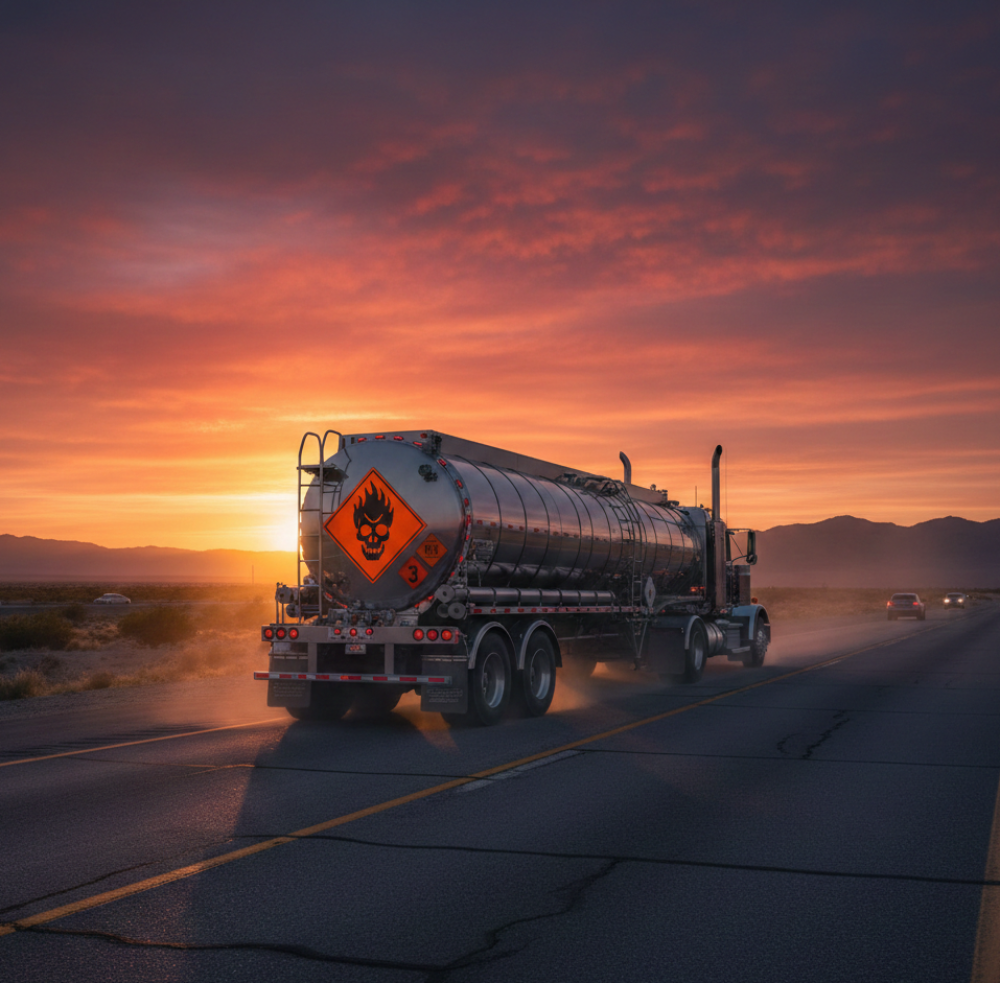
Dangerous goods: why fines for violations may already cost more than the cost of transportation
When the cost of error becomes critical
Transporting hazardous materials has always been considered a high-risk category. But by 2026, regulations in this area have become significantly stricter. In many countries, fines for violating storage, labeling, documentation, or transportation regulations have increased so much that in some cases they actually exceed the cost of the transportation itself.
This has changed the business approach. While compliance was previously sometimes perceived as a formality, today any error is viewed as a potential financial and reputational risk. Hazardous materials logistics is no longer just an operational task; it has become part of a company's safety and compliance management system.
Why sanctions continue to increase
The increase in fines is not due to a single cause. It is the result of several global trends.
First, environmental controls have been tightened. A series of accidents and leaks around the world have demonstrated that the consequences of errors in the transportation of chemicals, fuels, or waste can affect not only a company but entire territories. In response, regulators have begun to tighten enforcement and increase financial liability.
Second, attention has increased to the safety of people and infrastructure. Dangerous goods include not only industrial substances but also pharmaceuticals, batteries, gas mixtures, and medical supplies. Violations during their transportation can lead to fires, explosions, or contamination, so requirements for packaging, labeling, and transportation conditions have become more stringent.
Third, international policies for controlling the movement of sensitive goods have been strengthened. Governments seek to prevent smuggling, illegal use of substances, and violations of export regulations. This has led to more stringent checks of documents and routes.
As a result, fines are increasingly viewed not as a formal sanction, but as a risk prevention tool.
Digitalization has strengthened control.
By 2026, the inspection mechanism itself has significantly changed.
While inspections were previously often conducted randomly and post-factum, today control is increasingly based on data.
The following are used:
- electronic transport documents
- digital cargo tracking systems
- temperature, pressure, and position sensors
- automatic license and permit checks
- integration with government databases
This means that violations are easier to detect, and attempts to conceal them become virtually impossible. Errors are recorded by the system, and accountability is enforced automatically.
For businesses, this means a shift from "reacting to inspections" to continuous compliance.
How does this affect the transportation economy?
The rise in fines has changed the financial logic of the market.
Today, companies evaluate not only the transportation rate but also the potential cost of the violation.
Even if the delivery itself is relatively inexpensive, a violation can result in:
- administrative fines
- suspension of operations
- license revocation
- compensation for damages
- additional inspections and delays
Additionally, there are indirect consequences: loss of contracts, insurance company refusals, and reputational damage.
As a result, many companies include in their budget not only the cost of transportation but also the costs of contractor audits, staff training, insurance, and process control. This increases the cost of logistics but reduces the likelihood of much larger losses.
Licenses and certificates are no longer a formality.
While previously, having a license was sometimes perceived as a bureaucratic procedure, today it is a basic criterion for work authorization.
Clients increasingly require:
- valid licenses and permits
- proof of personnel training
- documents for specialized equipment
- instructions and emergency response plans
- proof of compliance with safety standards
The absence of these documents automatically excludes the contractor from the list of potential contractors. The market is gradually shifting toward those companies that can confirm the transparency and safety of their processes.
How market behavior is changing
Strict requirements have divided the market into two groups.
One emphasizes full compliance, investing in training, digital control systems, and security. For them, compliance becomes a competitive advantage.
The other group is trying to reduce prices by cutting corners on procedures and paperwork. But such proposals are becoming increasingly risky for customers. Large companies are increasingly refusing to work with dubious contractors, realizing that liability could affect the entire supply chain.
Thus, the market is gradually moving toward a more transparent and regulated model.
What does this mean for business today?
By 2026, the transportation of hazardous materials will no longer be an area where one can rely on verbal agreements or minimal documentation.
Successful companies:
- vet contractors in advance
- record all stages of transportation
- use digital monitoring systems
- train staff in safety requirements
- view compliance as part of the strategy, not a formality
This approach makes transportation more expensive during the preparation phase, but significantly reduces the risk of catastrophic costs later.
Summary
Fines for violations in the transportation of hazardous materials have increased for a reason. This reflects the overall shift in logistics toward stricter standards of safety, transparency, and accountability.
Today, the winner is not the one offering the lowest price for transportation, but the one who can prove that the transportation will be carried out safely and according to regulations. In today's market conditions, one mistake can cost more than the entire contract—and that's why regulation in this area continues to tighten.
Your experience matters! Take a short survey and see how others answered. Take part