Latest posts


Jun 04
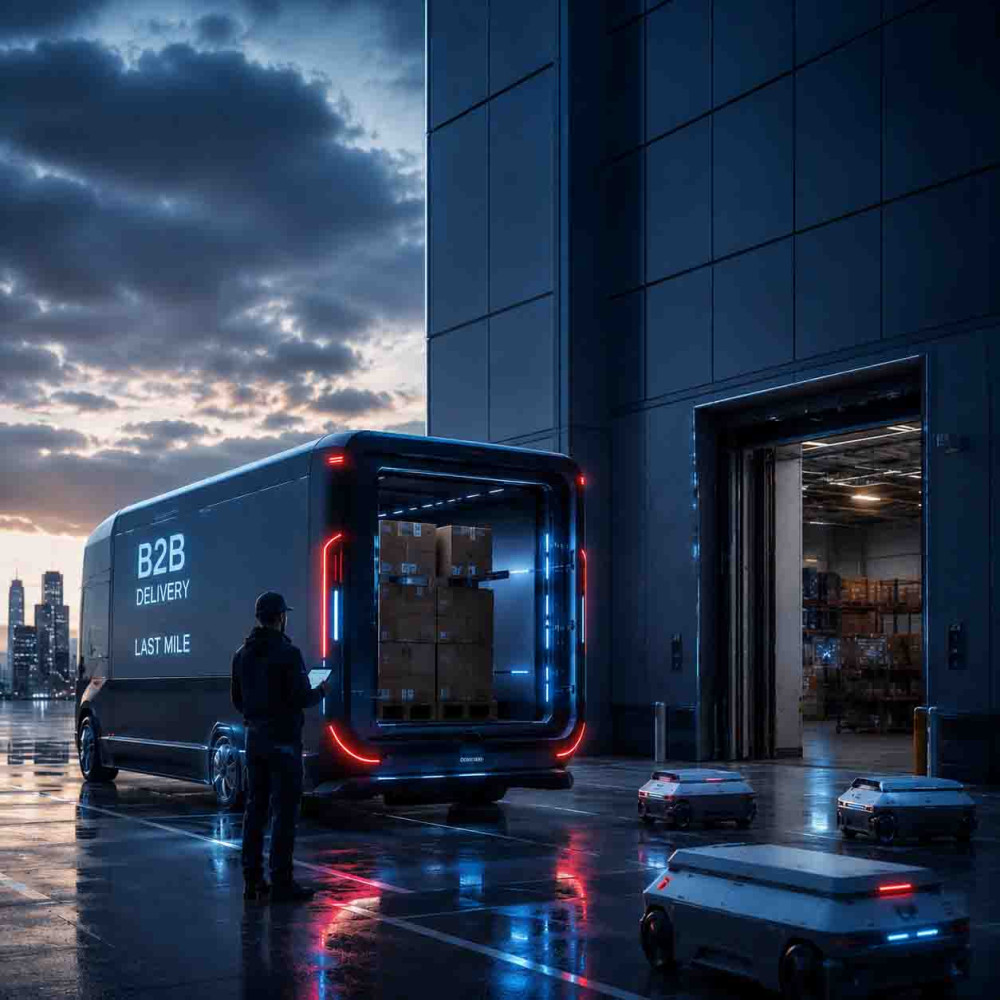
Last-Mile Delivery in B2B: Where the Main Disruptions Occur
Introduction
Why is it that even with well-structured logistics, optimized routes, and control at every stage, the last mile so often becomes the source of delivery failures, customer conflicts, and financial losses? Why do companies that successfully manage international transportation and warehouse operations lose control during the final stage of delivery? In 2026, the last mile in B2B is no longer merely the “final step” but a critical point where all accumulated supply chain deviations converge.
The main issue is that businesses have traditionally underestimated the complexity of the B2B last mile, applying the logic of mass delivery models to it. However, unlike standard delivery systems, B2B delivery is not simply the movement of goods. It involves timing requirements, delivery conditions, site access, documentation, and coordination with the recipient. This makes the process far more sensitive to any deviations.
As a result, the last mile becomes more than just the concluding stage of transportation; it becomes the area where the entire logistics system is tested. It is here that planning mistakes, coordination weaknesses, and data inconsistencies become visible. It is also here that businesses experience the most significant losses.
Why the B2B Last Mile Is More Complex Than It Appears
At first glance, the last mile seems straightforward—a shipment is transported from a warehouse to the customer. In reality, however, this stage is often the most complex part of the entire logistics process from a coordination and management perspective.
The key distinction in B2B is that the recipient is not a passive participant but an active stakeholder in the process. The recipient may have specific requirements regarding delivery times, receiving procedures, documentation, and even the delivery format itself. This means that delivery operations must be synchronized not only with logistics activities but also with the customer’s operational processes.
Access to the delivery location further increases complexity. Restrictions related to time windows, infrastructure, operating schedules, and internal procedures create additional conditions that must be taken into account. These limitations reduce flexibility and increase the likelihood of disruptions.
As a result, the B2B last mile is not merely a transportation activity but a complex system of interactions in which every component influences the final outcome.
Where Disruptions Actually Occur
Most last-mile disruptions are rarely caused by transportation itself. More often, they result from mismatches between planning assumptions and real-world conditions.
The main points of failure include:
- Uncoordinated delivery schedules
- Recipient unpreparedness
- Documentation errors
- Access restrictions
Each of these factors can cause delays or make delivery execution impossible.
It is particularly important to understand that such disruptions are often the result of accumulated deviations throughout the supply chain. Mistakes made during earlier stages frequently become visible only at the final stage, when the system encounters real operating conditions. This makes the last mile the point where problems become concentrated.
The Economics of the Last Mile: Where Money Is Lost
Last-mile losses are multifaceted and include both direct expenses and indirect costs.
The main sources of losses include:
- Repeat deliveries
- Vehicle idle time
- Increased delivery duration
- Additional operational activities
These factors increase costs and reduce overall efficiency.
It is also important to consider the impact on customer relationships. Delivery failures can lead to a loss of trust and reduced business volumes, creating long-term consequences that extend beyond immediate operational costs.
As a result, the last mile affects not only expenses but also revenue generation.
The Impact of Variability and Instability
One of the defining characteristics of the last mile is its high level of variability. Even under seemingly identical conditions, outcomes can differ significantly due to numerous influencing factors.
This makes planning less accurate and increases the likelihood of deviations. Companies are often forced to build additional buffers into their operations, which raises costs.
At the same time, instability amplifies the consequences of errors. Even minor deviations can produce significant operational impacts, making the overall system more vulnerable.
Business Mistakes in Last-Mile Management
One of the most common mistakes is underestimating complexity. Many companies treat the last mile as a simple operational step, resulting in insufficient attention to planning and coordination.
Another widespread issue is the lack of integration with the customer. Poor coordination increases the likelihood of disruptions and operational inefficiencies.
A further challenge is the lack of reliable data. Without accurate information, it becomes difficult to manage the process effectively and make informed decisions.
How the Approach to the Last Mile Is Changing
In 2026, companies increasingly view the last mile as part of an integrated system rather than as a standalone stage. This shift requires stronger process integration and higher levels of coordination.
Customer interaction becomes a central component of this approach. Businesses are beginning to incorporate customer processes and operational requirements into delivery planning, reducing the likelihood of deviations.
At the same time, technology is playing an increasingly important role by improving planning capabilities, visibility, and operational control.
Where the Boundary of Efficiency Lies
The boundary of last-mile efficiency is defined not by delivery speed but by predictability and execution accuracy. In a B2B environment, a delivery completed faster but with deviations from agreed requirements often causes greater losses than a slower delivery that fully complies with customer expectations.
Companies focused exclusively on reducing delivery times frequently discover that their systems become less stable. Attempts to accelerate operations without considering operational constraints often lead to more disruptions, repeat deliveries, and additional activities. As a result, time savings are offset by higher costs.
In practice, this creates a situation in which logistics operations function in a constant state of adjustment. Every deviation requires intervention, increasing the workload on personnel and reducing overall efficiency. Meanwhile, the underlying causes remain unresolved.
Therefore, the true boundary of efficiency lies where delivery becomes manageable rather than simply fast. Achieving this requires a balance between speed, accuracy, and stability, which is possible only through a systematic approach.
Emerging Trend: Integration Instead of Delivery
One of the most significant emerging trends is the shift from viewing the last mile as a delivery function to treating it as an integration function. Companies increasingly regard the last mile as part of the customer’s operational system.
This means that delivery processes must be integrated into the recipient’s workflows rather than operating independently. Such an approach helps reduce disruptions and improve overall efficiency.
At the same time, data and coordination are becoming the foundation of effective management, enabling greater transparency and operational control.
Conclusion: The Last Mile as an Indicator of Overall Logistics Performance
The key conclusion is that in 2026 the B2B last mile is no longer simply the final stage of delivery. Instead, it has become an indicator of the effectiveness of the entire logistics system. It is at this stage that accumulated deviations, planning errors, and coordination shortcomings from earlier phases become visible.
The fundamental shift is that last-mile performance is determined not by speed but by the system’s ability to consistently fulfill delivery requirements. This includes customer synchronization, data management, and process control.
Companies that treat the last mile as part of an integrated system gain opportunities to reduce losses and improve service quality. They integrate processes, enhance transparency, and manage deviations more effectively.
Those that continue to view it as a simple delivery stage face increasing disruptions and rising costs. As a result, the last mile becomes not only the point where delivery ends but also the place where the effectiveness of the entire logistics operation is ultimately determined.
Your experience matters! Take a short survey and see how others answered. Take part